There are many ways to experience the world around you. For some, that could mean visiting the museums and churches of eastern Europe. For others, it may involve haggling with vendors and taking a risk on street food in Latin America. You could go on an African safari or enjoy the Russian ballet.
For our friends Josh and Irene, all of the above is fine...but they would prefer to find a big splotch of green on the map and then proceed to walk from one end of it to the other. They arrived in Jerusalem a week or two after us, and as near as I can tell, we have yet to do one non-work-related function with them that didn't involve sand getting in my shoes. I approve of this, as it often results in my seeing something I may otherwise have never given a passing thought to.
On Sunday, August 10th we joined them for a hike along the Wadi Me'Ara Trail in the Wadi Dolev Nature Reserve. The trail, located 18km south southwest of Jerusalem, begins with a series of orchard trees that eventually give way to low vegetation. The canyon is home to natural woodland species and wildflowers. A sign at the trail's beginning advised that foxes, jackals, gazelles, porcupines, hyenas, and rodents make their homes there, as well as various kinds of amphibians, songbirds, and raptors.
Now, even assuming that "raptors" referred birds and not dinosaurs, I still had no desire to run into 56% of the critters listed. Happy to report that we encountered none of the above.
The trail's main attractions would have to be En Khod and the ruins of Bayt 'Itab, which have been turned into a national park (Bayt 'Itab National Park, for those that missed this post's title).
Water for the residents of the surrounding villages (from the Byzantine, Crusader, and Ottoman periods, as evidenced by surrounding ruins) was provided by En Khod, which is Arabic for "the spring of the watering trough."
The spring has a 40 meter long tunnel with three vertical shafts. Water collects in a constructed reservoir room and is then channeled toward a pool and into the trough from which flocks would drink.
Orchard trees surround the spring, among them fig, lemon, and almond. Mediterranean species are also found here, including Kermes oak, carob, and terebinth. The land in the spring's immediate vicinity is so fertile that lush tree-sized grape vines thrive haphazardly on their own, a far cry from the small, strategically placed vines found in nearby winery orchards The spring also attracts all of the various wild animals mentioned earlier.
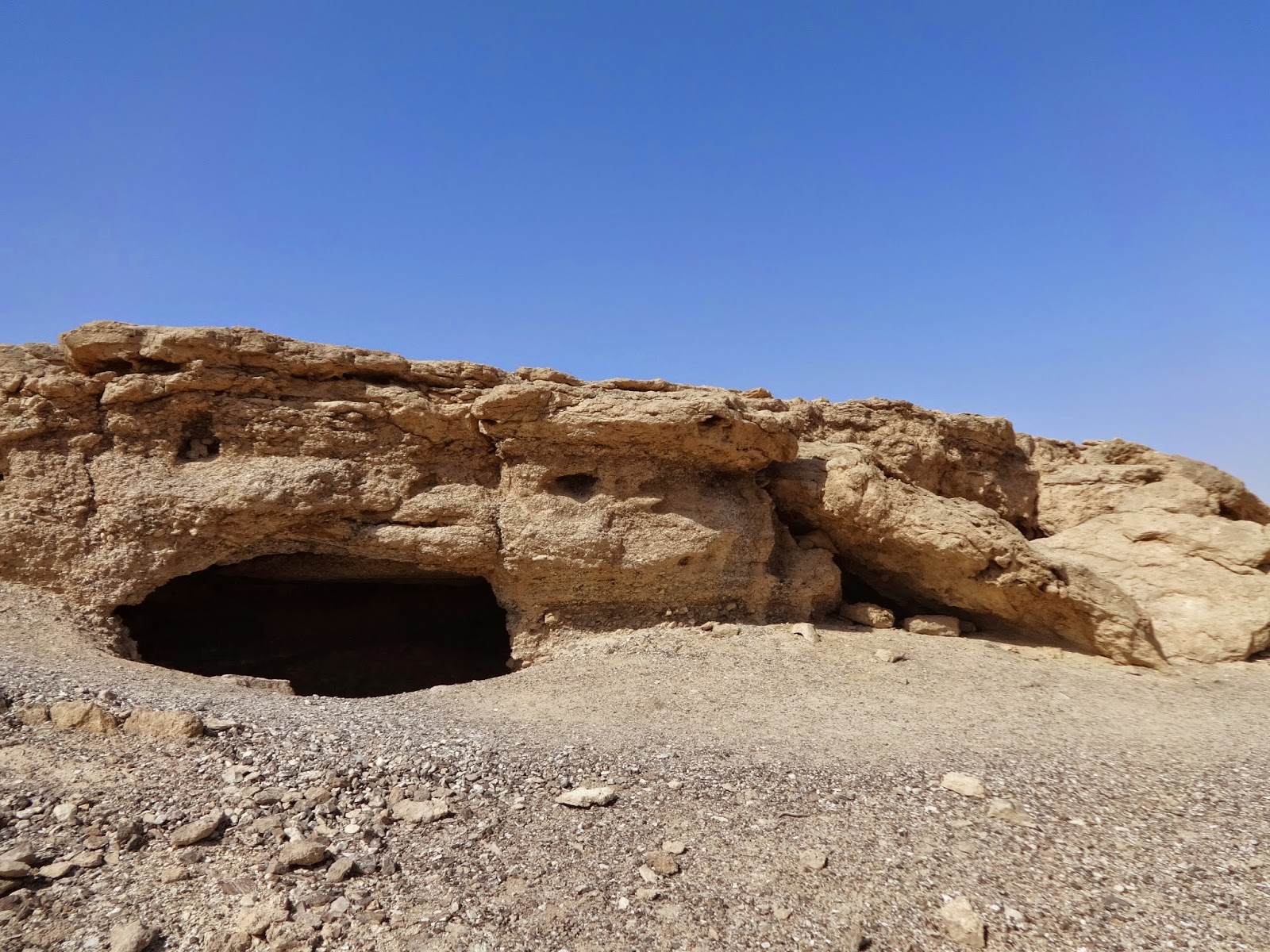
By contrast, nearby Bayt 'Itab sits abandoned in a landscape so arid you can hardly conceive of its close proximity to the spring.
Bayt 'Itab was a Palestinian village located just outside of Jerusalem and is believed to have been inhabited since biblical times. A tunnel that led from the village to the spring is associated with the story of Samson, as it is speculated that this is the site of the Rock of Etam, where angry Samson took refuge after his wedding...didn't go quite according to plan.
Up until the end of the British Mandate, approximately 600 Muslim families lived in stone houses and cultivated grains, fruit trees, and olive groves. Some bred livestock. The village was depopulated and demolished following Operation HaHar in October 1948, which saw Israeli forces fighting to extend the Jerusalem Corridor to the south.
The village's displaced inhabitants fled to Bethlehem, Hebron, and the Dheisheh Refugee Camp in the West Bank.
In 1950, an Israeli settlement, Nes Harim, was established to the north of Bayt 'Itab, on an adjacent peak. Like Baty 'Itab before it, the settlement's population hovers around 600.
The Israel Nature and Parks Authority restored the area around the spring in 2005.
The population of the Dheisheh Refugee Camp had grown from 3,400 in 1949 to 9,399 by 2006.
Showing posts with label Hiking. Show all posts
Monday, March 2, 2015
Tuesday, August 12, 2014
Moa
After much discussion on how great it would be, on February 22nd we finally took our first Israeli desert hike. Our pup Zelda and a handful of coworkers from Jerusalem and Tel Aviv were along for the ride. A fun day of hiking, sweating, gulping fresh water, almost falling off of humungous hilltops (mini mountaintops?), and picnicking was had by all.
Because I have this base need to be informative, and the internet isn't exactly overflowing with information about Moa, what follows is basically a transcription of a plaque located at the ruins of an ancient Nabatean fortress that we explored that day.
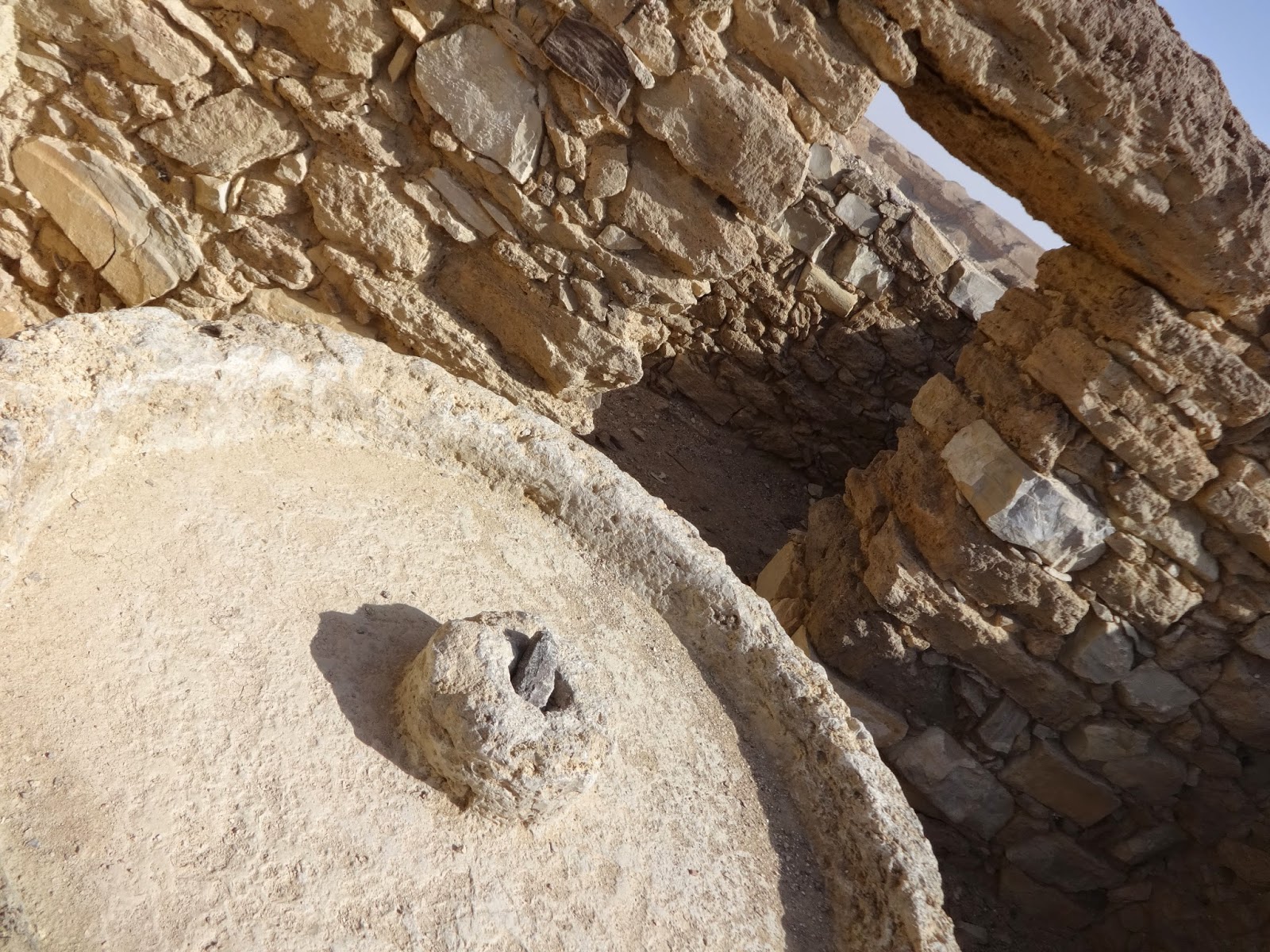
Moa, located in Israel's Negev desert, is but one of many stops on the ancient Nabatean incense route. The Nabateans were an ancient Semitic people who inhabited northern Arabia and the Southern Levant. Nabatean merchant caravans arrived at Moa after crossing the Arava Desert. Moa contains the remains of an ancient Nabatean fortress, agricultural installations, an aqueduct, and an olive press used in the extraction of oil for the production of perfumes.
The station was established in the third century BCE by the Nabateans, who were known for their ability to not only survive in the desert but to make maximum use of it. They earned their living providing pastures for camels, sheep, and goats, and they accumulated great wealth from the sale of perfumes on the international market. They were a free people who found shelter in the desert during times of unrest. They knew how to hoard water in simple but ingenious ways, and built hidden underground reservoirs with plastered walls that assured a secure water supply. They knew how to lead convoys in the desert and to the seas, and thus controlled the incense routes. Their prosperity and economic success greatly influenced their culture and lifestyles and so from desert nomads they became permanent residents of urban settlements. They left behind the impressive ruins of their towns, especially those of Petra in Jordan, which is number one on the must-see-before-we-leave-list.
Moa was abandoned in the third century CE, probably because of the outbreak of an epidemic. The residents left behind them the biggest, most impressive and best preserved archaeological site in the Arava. The site was proclaimed a world heritage site by Unesco together with the four central Nabatean cities of Avdat, Mamshit, Shivta, and Halutza. These settlements preserve a unique desert culture based on a mutually beneficial relationship between man and his environment, and a deep acquaintance with the desert as well as a unique ability to survive in it.
Subscribe to:
Posts (Atom)